In Florida, mold doesn't wait. While homeowners in drier climates might have two or three days before mold colonizes water-damaged materials, Central Florida's heat and humidity compress that window to 24–48 hours. The good news: if you act fast and correctly, you can prevent mold from taking hold even after significant water damage.
Why Florida Is a Worst-Case Scenario for Mold
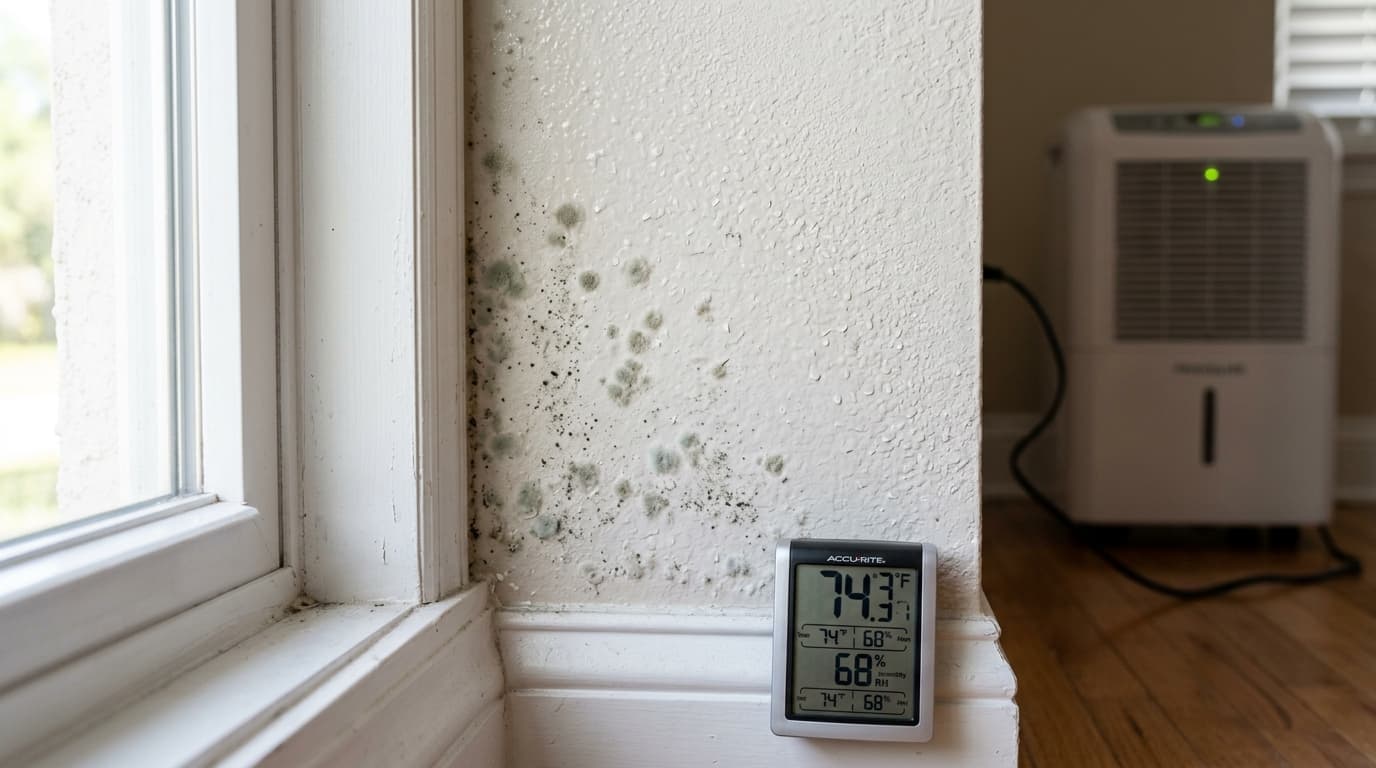
Mold spores are everywhere — indoors and outdoors — and they need only three things to grow: moisture, a food source (drywall paper, wood, fabric), and temperatures above 40°F. Florida delivers all three in abundance. With outdoor humidity routinely above 70% and indoor temperatures in the 70s and 80s even with AC, mold finds a perfectly hospitable environment in any water-damaged material.
Orlando's average relative humidity runs 74% year-round. When water damage occurs, affected materials absorb moisture and can reach humidity levels that trigger mold germination within a single day. This is why professional drying starts in hours — not days.
The Critical 24–48 Hour Window
The first 48 hours after water damage are the most important. During this window, mold spores are landing on wet surfaces but haven't yet germinated and colonized. Professional water extraction and drying equipment deployed within this window gives you a genuine chance at mold-free restoration. After 48 hours, the odds shift — visible mold growth may begin appearing, and remediation becomes a separate, more expensive process.
What NOT to Do (Common Mistakes)
- Don't point fans at wet walls incorrectly. Household fans circulate air but don't create the negative pressure needed to pull moisture from inside wall cavities. Worse, pointing fans the wrong direction can spread mold spores to unaffected areas.
- Don't close the house up. Sealing windows and doors traps humid air and accelerates mold growth. Ventilation matters — but it needs to be managed strategically alongside dehumidification.
- Don't rely on your HVAC system alone. Your AC removes some humidity but isn't designed for emergency drying. Running it after water damage can spread mold spores through the duct system to other rooms.
- Don't assume the surface is dry because it looks dry. Wall surfaces can feel dry while the interior cavity remains saturated. Only calibrated moisture meters and thermal imaging can confirm true dryness.
- Don't wait to see if mold appears before calling. By the time you see mold, it's already been growing for days. Visible mold means a larger, more expensive problem.
Professional Drying Standards That Prevent Mold
Certified restoration professionals follow IICRC S500 standards, which define specific moisture content levels that materials must reach before they're considered dry. These aren't arbitrary — they're the moisture thresholds below which mold cannot grow.
- Wood framing must reach below 19% moisture content
- Drywall must be dried to equilibrium with surrounding dry materials
- Concrete slabs require specific drying times based on pour thickness and moisture readings
- Ambient relative humidity in the affected area must be brought below 50%
Industrial air movers, commercial dehumidifiers, and injectidry systems work together to achieve these standards. The equipment runs 24/7 and is monitored daily with moisture meters until goal readings are confirmed throughout the affected structure.
Warning Signs That Mold Has Already Started
If any of the following appear within days of water damage, mold has likely already taken hold and remediation — not just drying — is required:
- Musty or earthy odor that wasn't present before
- Visible discoloration on walls, ceilings, or baseboards (gray, green, black, or white fuzzy growth)
- Unexplained allergy symptoms or respiratory irritation in occupants
- Bubbling or peeling paint or wallpaper
- Dark staining appearing at the base of walls or along floor edges
If you notice any of these signs, don't attempt to bleach or wipe away mold yourself — this disturbs the colony and sends spores airborne throughout your home.
Act Fast — Call Ryan at Central Florida Disaster Recovery
Ryan's available 24/7 because water damage emergencies don't wait for business hours. The faster your matched pro arrives, the better your chances of mold-free restoration. Call Ryan directly at 321-420-7274 — our network serves all of Central Florida and can typically be on-site within an hour.