Water damage is one of the most stressful things a homeowner can face — especially when it happens suddenly at 2am from a burst pipe or during a storm. What you do in the first 24 hours can save you thousands of dollars and prevent mold from taking hold.
← Back to Blog
What To Do in the First 24 Hours After Water Damage
· Central Florida Disaster Recovery
Step 1: Ensure Your Safety First
Before anything else, make sure the situation is safe. If there's any chance of electrical hazards from water near outlets, breaker panels, or appliances, stay out and call your utility company first. If the water is from a sewage backup, it's a biohazard — don't touch it without protective equipment.
Step 2: Stop the Source (If Possible)
If a pipe burst, turn off your water main immediately. Every minute the water flows, the damage gets worse. Your water shut-off is typically near the water meter, often in the garage, utility room, or outside near the curb. Know where yours is before an emergency happens.
Step 3: Document Everything Before Touching It
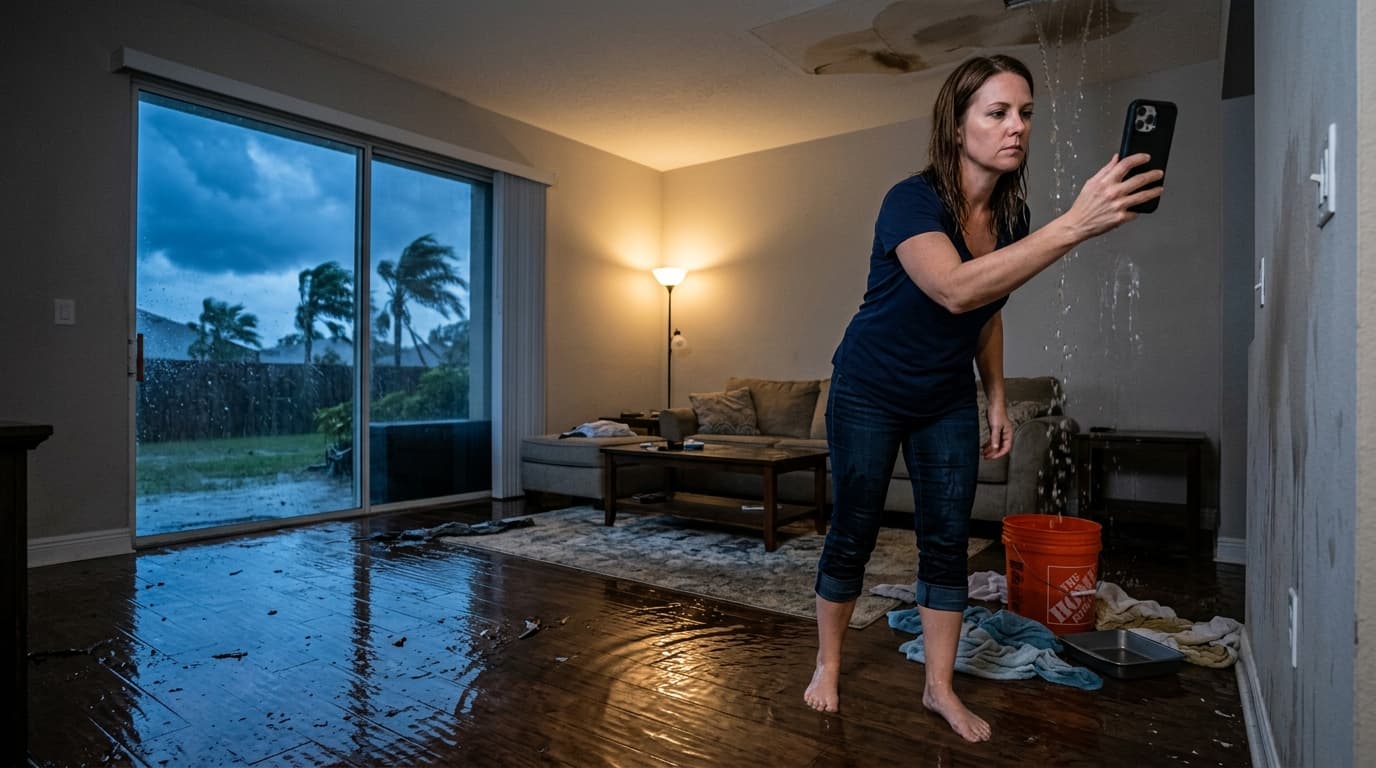
Take photos and video of every affected area before you move anything. Walk through the entire house — water travels and often affects areas far from the source. Your insurance company will want this documentation, and so will the restoration company that writes your estimate.
Step 4: Call a Professional Restoration Company
Call a restoration company right away, not after you've tried to clean it up yourself. DIY water extraction with a shop vac misses the moisture trapped in walls, subfloor, and insulation. This hidden moisture feeds mold; EPA advises drying water-damaged areas and items within 24-48 hours to prevent mold growth. Professional equipment (truck-mounted extractors, thermal cameras, commercial dehumidifiers) is necessary to actually dry the structure.
Step 5: Contact Your Insurance Company
Open a claim as soon as possible. You can open the claim while you wait for the restoration company. Your matched company documents the damage and can explain its own estimate to the adjuster. Florida claim deadlines: what to know.
What NOT to Do
- Don't use a household fan or hair dryer — these don't reach structural moisture
- Don't throw damaged items away before documentation
- Don't wait to call — every hour increases mold risk and repair costs
- Don't turn on HVAC systems that may have been affected by water
Call Central Florida Disaster Recovery
Call any hour. Owner Ryan Solberg takes the calls; if he is on another call, he calls you back. Water damage in Orlando or Central Florida? Call or text Ryan at 321-420-7274 and he matches you with a restoration company. You pay CFDR nothing, and CFDR does not bill your insurer. House flooded? Who to call, in order.
Related Services
Dealing with this right now?
Active loss? Call. Don't fill in a form.
Call any hour. Owner Ryan Solberg takes the calls; if he is on another call, he calls you back. You pay CFDR nothing, and CFDR does not bill your insurer.
Who is CFDR?
Private Orlando restoration referral service, not FEMA. Call or text 321-420-7274 24/7 and Ryan Solberg matches you with a local restoration company. You pay CFDR nothing, and CFDR does not bill your insurer.
Where does CFDR match companies?
CFDR matches homes and businesses within about 90 minutes' drive of downtown Orlando: Orange, Seminole, Osceola, Lake, Volusia, Polk, Brevard, Sumter and Marion counties. That covers Orlando, Kissimmee, St. Cloud, Sanford, Winter Park, Apopka, Clermont, Lakeland, Winter Haven, Daytona Beach, DeLand, Melbourne, Palm Bay, Titusville, Leesburg, The Villages and Ocala. Tampa and Brandon are edge areas: Ryan matches them when a network company covers the address. Outside these counties, call about large commercial, multi-unit or whole-home losses.
- Orange County
- Seminole County
- Osceola County
- Lake County
- Volusia County
- Polk County
- Brevard County
- Sumter County
- Marion County
General information, not legal, insurance or medical advice. Figures and timelines in this article that do not link to a source above are typical industry ranges that CFDR has not individually verified (UNVERIFIED); confirm specifics with your insurer, your agent and the company doing the work.